Big Sky vs Whitefish: The Treasure State’s Ski Destination Showdown

If you’d like to make yourself believe that winter hits better in the Montana Rockies, you aren’t alone. A constellation of world-class ski resorts dot the Treasure State, however, experienced skiers planning a Montana ski vacation usually zero in on two: Big Sky in the south and Whitefish in the north. These two giants offer vast alpine terrain and the type of world-class snow where your heart can finally roam.
When it comes down to the best ski resort in Montana, you really can’t make that distinction. On snow, you’re looking at two completely different styles of riding, and once the boots come off, it’s more about the experience you’re after. One boasts a major resort scale with modern lift infrastructure while the other has stuck to its grassroots as a legendary local ski town in the Northern Rockies.
Unsure of which Montana mountain calls to you most? Grab a coffee, get comfortable, and dive into the complete Big Sky vs Whitefish showdown guide.
Mountain Stats at a Glance
| Criteria | Big Sky Resort | Whitefish Resort |
|---|---|---|
| Skiable Acres | 5,850 acres | 3,020 acres |
| Vertical Drop | 4,350 ft | 2,353 ft |
| Annual Snowfall | 33 ft | 25 ft |
| Number of Runs | 320 named runs | 111 named runs |
| Terrain Breakdown (Beg / Int / Adv / Ex) | 15% / 25% / 42% / 18% | 12% / 37% / 44% / 7% |
| Summit Elevation | 11,166 ft | 6,817 ft |
| Longest Run | Liberty Bowl (6 mi) | 6,817 ft |
| Number of Lifts | 40 | 14 |
Big Sky Vs Whitefish Terrain Overview
While both ski resorts are nestled in the Rocky Mountains, their skiing profile couldn’t be more different. Although intermediate and advanced skiers will find excitement at both resorts, the terrain, steepness, and style of skiing differ significantly.
Big Sky Resort
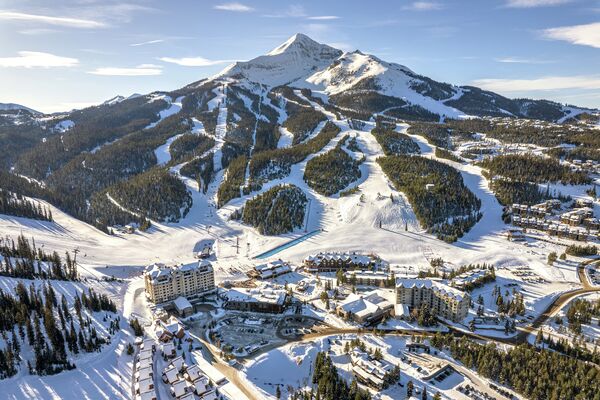
Photo Credit: Big Sky Resort
Snow Profile:
- A high elevation preserves a very light and dry snowpack.
- Averaging 400 inches per year
- Alpine snow can stay in great shape for the entire season.
If you crave massive vertical drops and true big mountain exposure, Big Sky delivers a volume of high-alpine terrain few ski resorts in North America can match. Widely considered one of the hardest and most extreme ski destinations on the continent, its steep alpine bowls and no-fall-zone areas test the skills of advanced riders.
The famed triple-black runs off Lone peak requires serious skill, patrol sign-off, and beacon locked gate access. You’ll encounter steep chutes, cliff-bands and mandatory straight-line pitches that hit sustained 50-degree angles!
Below the alpine, the resort opens into ample intermediate terrain. Long, sweeping groomed runs and thin glades dot the map with additional gentle slopes on Andesite Mountain.
Additionally, nearly 40 lifts pump skiers uphill at a capacity of 29,000 people per hour to help spread out crowds. Heated chairs, protective weather bubbles, and a modern gondola top out this well-equipped system.
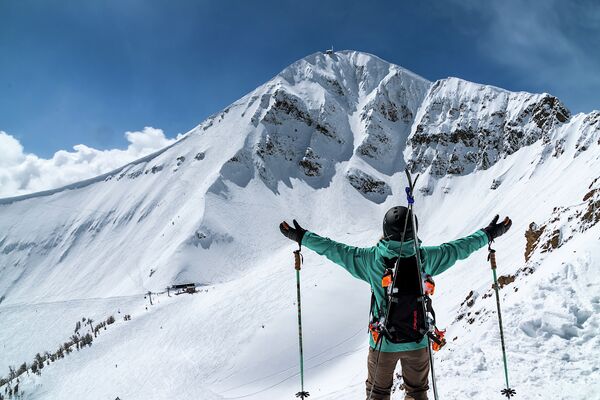
Photo Credit: Big Sky Resort
Best For:
- Advanced and expert skiers that can take advantage of Lone Peak’s triple-black terrain.
- Leg-burning vertical descents.
Notable Runs:
- The Big Couloir
- The Headwaters
- Challenger Zone
Whitefish Mountain Resort
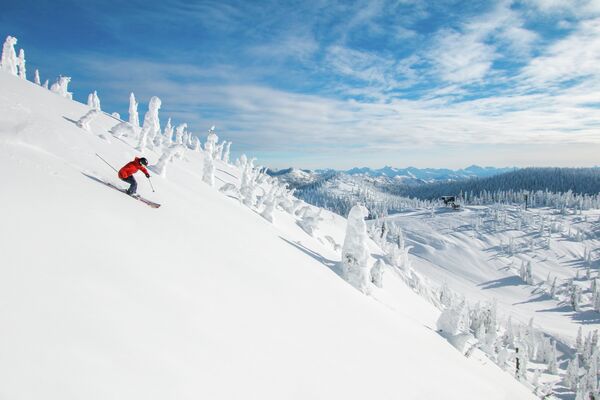
Photo Credit: Whitefish Mountain Resort
Snow Profile
- Averages 300 inches of snowfall per year.
- Pacific-influenced weather brings more frequent storms through the area, improving your chances of catching a pow day.
If you crave seamless mountain flow, continuous glades and authentic old school charm, Whitefish exists worlds away from the commercial mega-resort vibe. Though smaller than Big Sky, the resort's ski area was mapped out to take advantage of every face. From the summit, 360 degrees of options make accessing any part of the resort quick and efficient. Smaller crowds mean skiers can follow the sun and chase fresh lines all day.
The resort’s most technical terrain hides in Hellroaring Basin and along the East Rim. Advanced skiers can encounter vertical steep chutes, cliff bands, dense glades, and natural features that are sure to test technical skills.
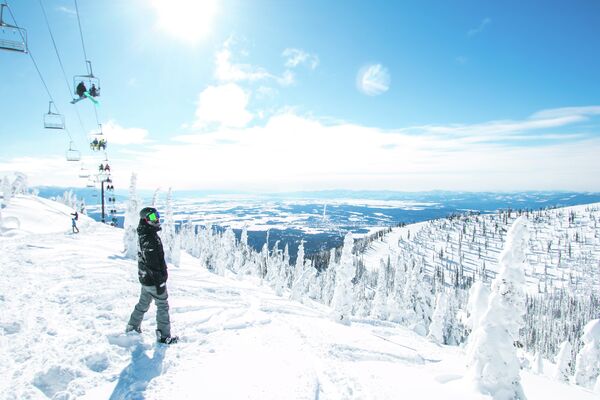
Below the “rim”, Whitefish offers terrain that opens up a bit more and attracts real glade enthusiasts. Long and wide open groomed runs twist and turn from the peak, complemented by open tree runs that invite intermediate and advanced riders to find flow between the snow ghosts.
Whitefish’s 14-lift network moves 26,300 people per hour up the mountain without major bottlenecks forming.
Best For:
- Strong intermediate and advanced skiers.
- Fast groomers, long glades.
- Classic ski culture.
Notable Runs:
- Inspiration
- Hellroaring Basin
- Medicine
Village and Towns
While these two resorts cater to skiers and boarders of all abilities, their village vibes are completely different. Big Sky focuses on modern luxury, sprawling chalets, full-service resorts, and more intimate evenings. Whitefish, on the other hand, is the epitome of an authentic ski town.
Big Sky: Luxury Mountain Retreat
Given how accommodation is spread out here, the hubs around the mountain tend to be private and self-contained. Guests often stay within their resorts to enjoy their privacy and amenities.
6 miles down the road, Big Sky Town Center has grown into a local hub with several shops, craft breweries, and dining.
Whitefish: Authentic Ski Town Vibes
The town of Whitefish sits 4 miles down the road and feels like an old-school western town. Wood-covered sidewalks, saloons, artisan shops, and locally sourced restaurants give a relaxing and warm vibe. The town's scene is rooted deep in local culture, friendly and unpretentious. It’s a place where you can walk around in the evening and strike up conversations with locals.
Key Attractions and Off-Slope Activities
Skiing and boarding aren’t the only things that draw visitors to these geographic gems. There’s more than a few very unique attractions to see near each ski resort.
Big Sky Standouts
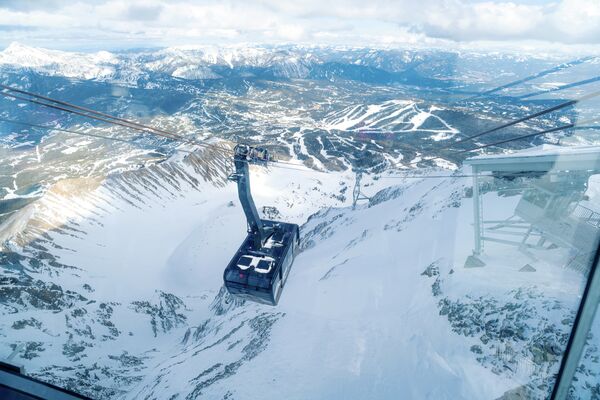
Kircliff Observation Deck - Perched atop Lone Peak at 11,166 ft, Kircliff offers a true paradise vantage point. The glass observatory offers undisturbed, 360-degree panoramic views of Yellowstone National Park.
Yellowstone Winter Excursions - Located a scenic 45-minute drive from the resort, Big Sky serves as an ideal home base. Snowmobile tours to Old Faithful, snowshoe hiking excursions, and snowcoach rides offer a unique day away from the ski resort.
Whitefish Standouts
Glacier National Park - Whitefish sits 30 minutes from the West Glacier entrance. Unlike summer, winter offers a peaceful chance to cross-country ski or snowshoe through the park without the crowds.
Night Skiing - If skiing is front and center of the trip, Whitefish offers over 600 acres of accessible night skiing. Cruise around less busy slopes, take in a more relaxed vibe, and wrap it all up with some great local après spots.
Lodging
Given the different scale and vibe of each resort, lodging at Big Sky and Whitefish mirrors the resort’s overall layout.
Where to Stay in Big Sky
The scale of Big Sky’s accommodation is impressive and reflects the luxuries found around the resort. Options range from historic resort hotels to high-end enclave areas featuring luxury properties
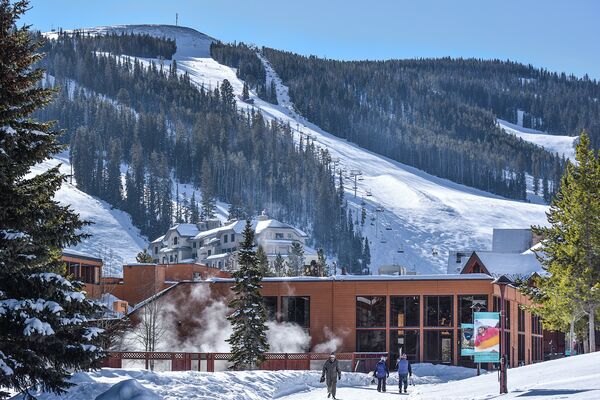
Mountain Village - Big Sky’s main slopeside hub. Here, you will find more true ski-in/ski-out properties, a variety of condos and hotels, and historic lodges like the Huntley Lodge. This is the heart of the ski resort with instant access to shops, cafes, and exquisite dining.
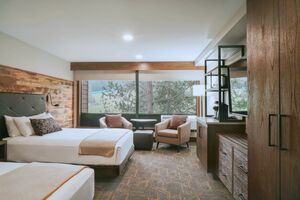
Moonlight Basin- Located on the right side of the resort sits an ultra-luxurious enclave tucked away into the rugged mountainside of Lone Mountain. You’ll find a mix of ski-in/ski-out chalets, modern townhomes, condos and upscale log cabins.
Staying here grants access to exclusive clubhouses with fine dining, sprawling spas and uncrowded lunch spots. Best of all, it offers access to the world's longest heated 8-person chairlift, making the cold morning upload to Lone Peak’s extreme alpine terrain effortless. The vibe in Moonlight Basin is quiet, nature-centered, and ski-focused.
Spanish Peaks- On the left side of the resort sits the refined concierge-style enclave of Spanish Peaks. If your expectations are to have everything curated and taken care of, look no further. Think luxury resort amenities, premium restaurants, and dedicated staff ready to attend to your every need.
The community features 5-star resort options alongside high-end rental properties and exclusive estates ready to entertain large families in search of complete privacy. Ski access on this side is more mellow, making it perfect for kids or beginners.
Where to Stay in Whitefish
Whitefish keeps lodging simple with user-friendly base area options that maximize independence.
Mountain Village (Upper and Lower Village): Slopeside lodging and alpine neighborhoods surround the base of the ski resort. Broken into Upper and Lower Village, Whitefish accommodation offers cozy and user-friendly options.
Ski-in/ski-out condo developments, hotels and chalets provide ample options to satisfy every type of guest.
Which Montana Resort Connects With You Most?
Choosing between Big Sky and Whitefish ultimately comes down to what you value most on a ski vacation. If you crave luxury, modern infrastructure, extreme skiing, and staggering vertical, Big Sky delivers big mountain skiing that rivals the best resorts on the continent. If your heart connects to classic ski-town vibes, uncrowded skiing, and a budget that leaves room for another vacation, Whitefish offers an authentic winter getaway like no other.
So whether you choose to get lost in the scale and luxury of Big Sky Country or embrace the powdery paradise of Whitefish, you’ll never know if you never go. So pick your mountain, pack your bags, and head for the Rockies – adventure calls your name.
About the Author Originally from Northern Ontario, Anthony now calls Whistler, Canada, home. As an outdoor enthusiast with a passion for science and tourism writing, he chases excitement and communicates his experiences through his written work. Anthony holds CASI 2 and CSIA 1 certifications. He has over eight years of teaching and coaching experience as a snowsports instructor and 20+ seasons of skiing and snowboarding under his belt. He also proudly holds a B.Sc in Nanoscience and Engineering from the University of Guelph and gets impressively excited about anything science-related.
When away from the office, Anthony celebrates his freedom by being immersed in mountain culture, playing instruments, and travelling internationally. Skiing, snowboarding, hiking, and mountain biking take up his free time, often complemented by sailing, and the occasional backpacking adventure