Best U.S. Ski Resorts for Beginners and Intermediates
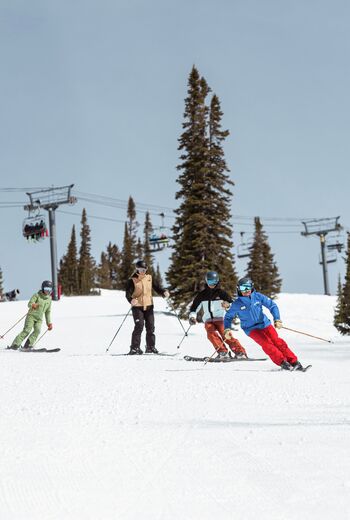
Across the United States, almost 500 ski resorts offer the chance to experience the mountains on skis or snowboards. For newcomers, that means endless opportunities to learn and grow this simple hobby into a lifetime pastime. However, not all resorts are designed to support this journey equally.
While most mountains offer green runs, the learning experience can vary dramatically. Some prioritize steep runs and extreme terrain, leaving developing skiers feeling overwhelmed by scale, crowds, and limited progression options.
The best ski destinations create the type of environment where skiers and boarders can learn safely, build skills naturally, and gain confidence across the mountain and beyond.
They offer more than just green and blue runs. Through careful terrain design, dedicated learning zones, abundant progression opportunities, and extensive ski school offerings, some resorts nail the beginner experience.
What Makes a U.S. Ski Resort Ideal for Learning and Progressing
Ski Resorts That Go Beyond the Basics
Given the sheer volume of ski resorts in the U.S., the ski industry is ripe with competition. A strong ski school can be the difference between surviving and thriving. The best programs don’t just teach the fundamentals; they use fun and engaging ways to adapt and grow individual learning styles.
Resorts that have figured this out offer a range of options focused on small class sizes and even affordable private lessons. Adult lessons that max out at four students per instructor, or kids' lessons, which are limited to five, allow each person to get enough attention, the free time to watch others, the opportunity to participate, and the chance to break ground alongside fellow learners. Any more and it can be chaos, especially on the kids' side.
The only exception to this comes with week- or season-long camps, where there’s usually some additional support for newbies initially.
Finally, ski schools that have access to designated learning or “family zones” with a mix of easy greens and blues provide the perfect area for safe and quiet progression away from the masses.
It’s for these reasons that even a single lesson early on can help set you in the right direction when developing skills necessary to navigate the mountain and control your speed.
Terrain Designed for Progression
Not all green and blue runs are created equal.
Even shifting between different resorts will illustrate this. That’s why it’s important to understand which resorts offer enough progressive terrain for beginners. The most effective mountains develop terrain that highlights natural progression.
When evaluating terrain designed for progression, look for:
- A wide, consistent beginner gone with pitch
- Longer green runs that extend beyond the base area, giving more opportunities to connect turns
- Clearly defined progression zones that bridge green to blue terrain
Resorts that nail this aspect allow newbies the space to get reps in and the comfort to gradually expand their progression, rather than having to manage gaps in terrain difficulty.
Ease of Navigation
Nothing is more overwhelming to a beginner than a massive mountain with a hundred runs, dozens of lifts, and more acreage than a small town to navigate. For these guests, how the mountain is laid out matters just as much as the terrain.
Resorts with intuitive lift systems leading to well-marked trails make it easier to explore without the chance of getting lost or finding yourself in over your head.
Lift access also plays a key role. While learning to walk in ski boots and juggling your equipment is a rite of passage, accessing the mountain shouldn’t feel like a challenge.
Resorts that offer direct access from lodging or parking to beginner lifts remove unnecessary friction.
Top U.S. Ski Resorts for Learning and Progression
Aspen Snowmass
Aspen Snowmass isn't just one mountain. The resort encompasses four mountains, Aspen Mountain (or Ajax), Highlands, Buttermilk, and Snowmass, as well as two mountain towns, Aspen and Snowmass.
Beginners and intermediates are especially well served by Buttermilk and Snowmass mountains, which offer two of the most progression-friendly experiences in the country.
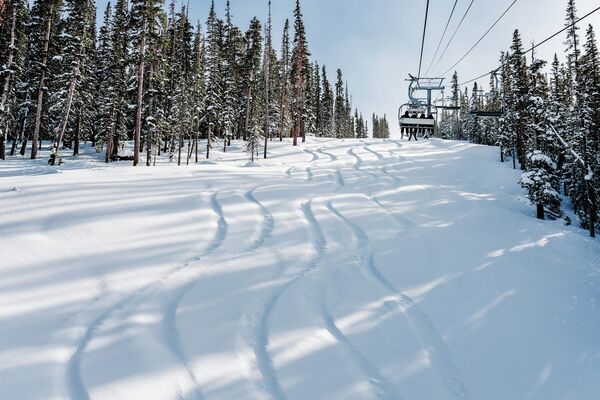
Buttermilk – The Best Place to Start
Combining a strong, dedicated learning area with one of the best ski schools in North America, Buttermilk creates one of the most enticing environments for developing the fundamentals of skiing and snowboarding.
Its fall line is consistently gentle, which equates to a ton of easy terrain from base to summit. The entire resort has this unintimidating feel to it and a lift network that allows beginners to find and lap easy zones repeatedly.
The simplicity of the resort continues for novice skiers with the ease of finding longer greens and blues. Progression is natural and manageable here. Runs are longer, but not so long that they wear out your legs quickly.
Anything around the West Buttermilk Express is learner-friendly, and Homestead Road provides over three miles of wide-open, meandering green trail to build endurance.
Good to know: You can actually park at each of the ski resort's main lifts, making access to whatever area you’re after a breeze. There's also a free shuttle between all the bases, and if you're renting equipment from Aspen's Four Mountain Sports, you can have your gear delivered to the mountain you plan to ski at the start of each day.
Snowmass – The Best Place to Progress
If Buttermilk is about building a strong foundation, Snowmass is about offering solid progression. Snowmass Mountain boasts almost ten times the terrain of its little brother, offering far more opportunities to explore, progress, and build endurance.
Snowmass is home to an award-winning ski school with two sizable learning areas that are well separated from the masses. Their Treehouse Kid’s Adventure Center at the base caters to children’s ski school lessons. The Elk Camp Meadows, located mid-mountain, is the resort's main beginner area.
Both learning areas offer the space needed to develop skills without pressure, and venturing outside of here naturally opens into longer, flowing greens and blues, perfect for continuing the journey. Slow ski zones around Coney Express open up blue runs to those ready for something a little steeper. Max Park and Monkhood are two great blue runs within the resort’s slow zones.
What sets Snowmass apart is how gradual the progression feels. Beginners aren’t forced into intimidating terrain high in the alpine. Instead, the mountain encourages exploration through longer, flowing runs.
Park City Resort – The Best Place to Explore
Entering as the largest ski resort in the United States, Park City Mountain offers beginners and developing skiers the most room to grow. The massive scale means you have an almost unlimited amount of terrain to access. With 341 runs and 43 lifts, its scale ensures there’s always new terrain to explore as confidence grows.
Park City’s High Meadow Park is their dedicated beginner zone where skiers can gradually expand into one of the largest networks of greens and blues in the country.
Under Ninety-Nine 90 is where you’ll find a variety of short and long blue runs. Dreamscape and Day Break chairs service shorter runs, while Tombstone Express provides access to longer intermediate runs.
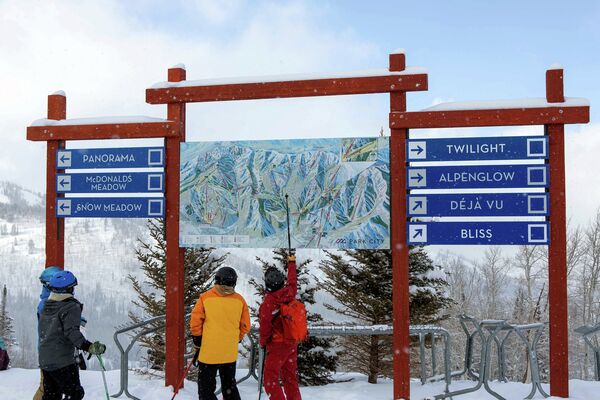
It’s not just on-piste terrain that makes Park City shine as a progressive resort. Intermediate bowl runs, easy glades, and intermediate off-piste options create the terrain desired by those wishing to develop their skills off the groomers.
Off the mountain, Historic Park City and Canyons Village provide a vibrant après scene full of shops, restaurants, and unique accommodations.
Steamboat Resort – The Best Place for Intermediates
Known for its relaxing vibe, exceptional intermediate skiing, and quieter crowds, this ski resort is a reliable spot for family-friendly skiing and building confidence on blues. Located off the beaten path, Steamboat Ski Resort sees less traffic and an abundance of snow, adding to its draw.
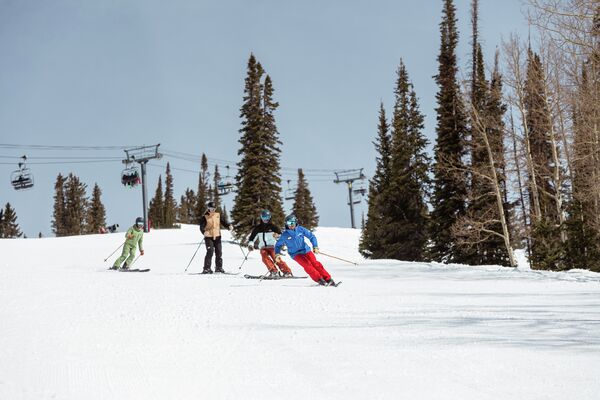
With 42% of the resort classes as intermediate, there’s plenty of variety for those looking to develop their skills on a wide range of blue runs. Quick lifts and shorter blue runs allow a quick succession of laps to benefit skill development.
Longer runs offer wide-open, meandering trails that pleasantly roll through the mountainside. Buddy’s Run is a short, iconic local favourite with varied terrain. Heavenly Daze and Rainbow boast wide-open cruisers with great views.
Off the slopes, Steamboat offers natural hot springs, a rustic downtown, and an abundance of winter activities.
Ready to Plan Your Next Steps?
Learning and progression aren’t something that can happen naturally, but what can support your journey is the right environment.
Resorts like Buttermilk, Snowmass, Park City, and Steamboat each offer something unique to the developing skier. Whether it’s taking your first turns on greens or building confidence on blues, these destinations are designed for progression.
By choosing the right starting point, you’ll spend less time feeling out of place and more time enjoying the mountains. Everyone remembers their first experience, and if you can nail it, you’ll return season after season.
About Anthony Butt Originally from Northern Ontario, Anthony now calls Whistler, Canada, home. As an outdoor enthusiast with a passion for science and tourism writing, he chases excitement and communicates his experiences through his written work. Anthony holds CASI 2 and CSIA 1 certifications. He has over eight years of teaching and coaching experience as a snowsports instructor and 20+ seasons of skiing and snowboarding under his belt. He also proudly holds a B.Sc in Nanoscience and Engineering from the University of Guelph and gets impressively excited about anything science-related.
When away from the office, Anthony celebrates his freedom by being immersed in mountain culture, playing instruments, and travelling internationally. Skiing, snowboarding, hiking, and mountain biking take up his free time, often complemented by sailing and the occasional backpacking adventure.