Should You Book a Ski Vacation After a Bad Snow Year

Last season (2025-26) created real hesitation among snow travellers. Many guests booked trips that never materialized into the conditions they hoped for. Others waited too long and missed out entirely once storms arrived. After 26 years in ski travel, this cycle is familiar to the travel consultants here at The Lodging Company.
A poor snow year changes traveller behaviour, but uncertainty has always been part of mountain travel. And the skiers who continue to get value from ski vacations are the ones who understand how to plan around variability instead of waiting for perfect conditions.
After a difficult winter, skiers become cautious. Booking windows shorten. Travellers watch forecasts obsessively. Everyone waits for certainty.
As a lodging company, we observed several factors influencing booking trends this past season: economic pressure, geopolitical instability, uncertainty surrounding cross-border travel, and climate variability.
There are factors no traveller, resort, or travel planner can control:
- Snowfall timing
- Freeze/thaw cycles
- Airline disruptions
- Fuel pricing
- Warm early seasons
But unpredictability does not mean skiing has become impossible, or that it is not worth doing.
The Resorts That Continue to Perform
The most resilient ski destinations tend to share a few key characteristics: high elevation, strong natural snowfall, and significant investment in snowmaking infrastructure.
The conversation around bad snow years is often applied more broadly than the reality on the ground warrants.
While many resorts across the Western US faced slow starts, rain events, and record warmth that cut significantly into visitation, Western Canadian resorts performed well overall in 2025-26. Banff Sunshine in Alberta had their second snowiest season on record, totaling 1,025 cm (33.6 ft). Lake Louise Ski Resort and Mount Norquay, also within Banff National Park, fared equally well.
Elevation, latitude, and snowmaking capacity create meaningful differences in outcome. Those are variables worth factoring into your planning before you book.
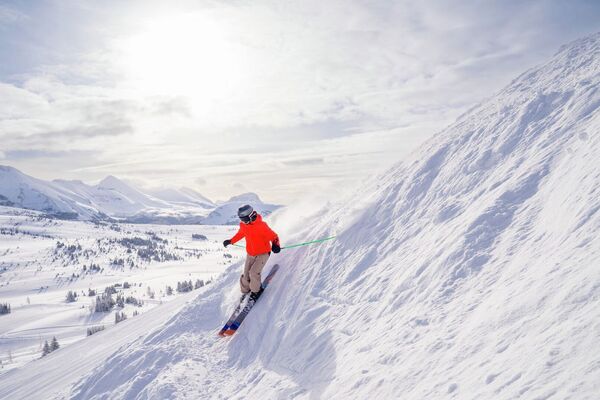
Banff Sunshine, 2026. Photo Credit: Jill Scarpato | SkiBig3
How Traveller Behaviour Changed in Winter 2025-26
Booking Trends
We observed a notable increase in last-minute inquiries in the 2025-26 season. Guests were monitoring storm forecasts before committing, and when conditions looked promising, bookings followed quickly. In uncertain stretches, travellers hesitated until they saw proof.
This pattern was not unique to our clients. Across the industry, booking windows compressed as travellers waited for conditions to confirm before committing.
By the time everyone agrees it is a good time to book, the market moves fast. Guests who fared best this season were the ones who chose resilient destinations early and built some flexibility into their plans.
Lodging Trends
Lodging inventory lingered longer than expected, including around the holidays and other peak periods.
According to DestiMetrics, Inntopia's mountain travel research division, in their May 2026 Market Briefing, winter 2025-26 closed with occupancy down 7% across western mountain destinations.
Rates held a modest 1.2% year-over-year gain, meaning the nearly 6% revenue decline came from fewer people booking, not from resorts dropping prices to fill rooms. The discount many hesitant travellers were hoping for largely didn't materialise.
Overall, visitation was down across the West. But among the guests who did travel, the pattern was telling.
Luxury properties were still among the first to sell out, while budget accommodations remained surprisingly resilient. Mid-priced lodging absorbed most of the pressure, caught between guests who were unwilling to compromise and those who needed to cut costs to keep the trip on the books.
That middle segment signals something real about where consumer confidence sits right now. People are still coming to the mountains; they are just making harder choices about how.
Budget lodging continues to represent genuine value for anyone who prioritizes time on the mountain over the surrounding amenities. It's also the foothold the next generation of skiers use to get into the sport.
Redefining What Makes a Ski Trip Worth Taking
A worthwhile ski trip should never be measured exclusively in snowfall totals. After speaking with several of our resort partners, it's clear we all see the focus shifting to the full experience: on the mountain, in the village, at the table, and in the accommodation.
After a challenging snow year, this re-framing and expectation-setting matter as much as what you find when you get up on the hill.
Our Week at Whistler Blackcomb
In mid-April, The Lodging Company was in Whistler for the 2026 Mountain Travel Symposium: five full days of partner meetings, keynote speakers, and industry forums. We had hoped to get a day or two on the hill if conditions and timing aligned. Neither worked out.
On the day we had penciled in for skiing, conditions made the decision easy. Visibility was poor as we ascended the gondola; snow was sparse until after the mid-station, and what was there was hard and icy.
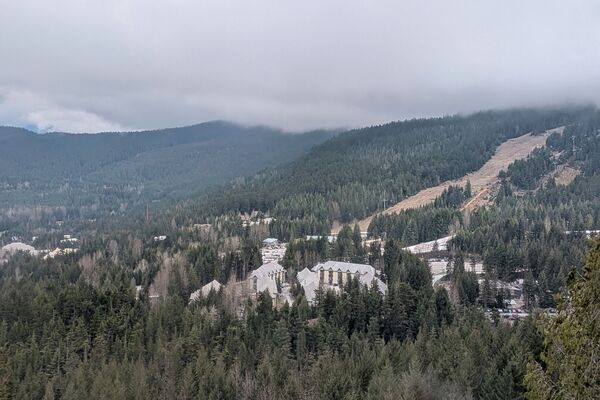
Whistler Blackcomb conditions April 2026
We rode the Peak to Peak instead, something we had wanted to do regardless. It gave us a clear lay of the land and a chance to talk with fellow attendees about what they were finding on the hill: patchy coverage, icy groomers, and greens that were skiing more like blues.
On another day later in the week, still rainy and with variable conditions at elevation, we took to the villages. We walked tree-lined pathways that stayed comfortable even in light rain, visited the Whistler Public Library, the Squamish Lil'wat Cultural Centre, a book shop, and a few of the art galleries scattered through the villages.
While it wasn’t the plan, it also didn’t feel like a consolation. It was a complete day.
The Turnaround
The turnaround came mid-week. Attendees who made it up after the storm reported a fresh layer of powder on top of solid older snow: crisp, consistent, and good for several days after. We didn't ski it ourselves, but we heard enough firsthand accounts to know the mountain had delivered exactly what it's capable of.
We've seen guests cancel trips before departure because the forecast looked uncertain. We've seen others arrive in identical conditions and come home saying it was one of their best trips. The mountain was the same. The difference was whether they had a plan for the full week, not just the ski days.
That's the mental shift worth making before next season.
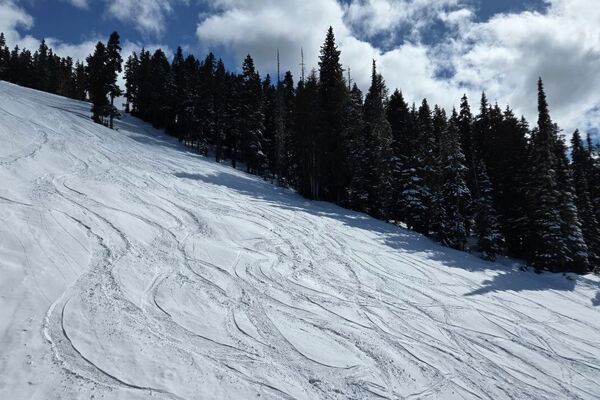
Whistler Blackcomb conditions April 2026
Ski Travel Has Always Required Optimism
Uncertainty is a permanent feature of ski travel planning, not an exception to it. That is not a reason to stop going, but it is a reason to plan accordingly.
Experienced travellers adapt rather than chase guarantees. They choose destinations with a track record of strong natural snowfall or serious snowmaking investment.
They build a day or two of flexibility into their itinerary. They set expectations that include the full trip, not just the conditions report.
Should you book a ski trip after a bad snow year? Absolutely. There is still tremendous value in mountain travel. The guests who found it this season were the ones who committed early to the right destinations and were prepared to make the most of whatever the mountain offered when they got there.
If you’re already thinking about next season, you're on the right track. The lesson is not to wait for certainty, but to build trips that can succeed without it.
About the Author
Brenna Roy is a Marketing Coordinator at The Lodging Company. She grew up in Vancouver, British Columbia, which goes a long way toward explaining both her instinct for the outdoors and her tolerance for variable weather. Four seasons in, she approaches skiing the way most people approach a cold plunge: slightly reluctant at the top, glad she did it at the bottom.