The No-Nonsense Ski Gear Guide to Buying vs. Renting

September can be an interesting time for those of us who embrace the outdoors. Temperatures begin to cool, the sun’s path across the sky lowers and a certain calmness seems to set in. As some bid a sad farewell to the dog days of summer, a chill in the evening air sparks the imagination of those who dream of venturing back out on snow-covered slopes for the upcoming ski season.
With the excitement of winter approaching, reality can quickly set in as you ponder what ski or snowboard gear needs to be added or upgraded for your winter ski trips. Let’s face it, there’s a lot of gear out there and not a whole lot of direction on what ski gear essentials you need versus what you can rent, especially if you’re on a budget.
Let this guide provide you with direction on creating a clear winter gear checklist and highlight the best ski gear of 2026. Of course, whichever direction you choose to take, The Lodging Company can help out with practical lodging and equipment rentals at North America’s top ski resorts.
Ski Gear Essentials
The age-old debacle of what to rent versus what to own is regularly contested. For some items that require comfort, performance, and hygiene, ownership is ideal. In other scenarios, renting ski gear can offer convenience, variety, and be more affordable.
Ownership
This list of gear consists of items that would be wise to own for comfort, safety, and familiarity. The majority of the list consists of soft goods and accessories aimed at keeping you comfortable while outdoors. The best piece of advice for obtaining these items is to scour end-of-season sales or the annual turkey sales at your nearest resort.
Clothing
Base Layers The most important ski clothing essential, base layers keep skiers and boarders warm and dry. Many companies offer thermal layers with different levels of moisture-wicking and warmth depending on your needs. Merino Wool is a natural fiber, offering the best level of warmth, breathability, and longevity. Look for high-quality brands like Smartwool, Icebreaker, and Helly Hansen.
Mid Layers A mid layer is an insulating garment worn between your base layer and your ski jacket or shell to help manage colder temperatures. Merino Wool, fleece, and synthetic options come from multiple ski brands. You can go as cheap or as expensive as you want for this category. Spring for something with a zipper, though, as this allows for better heat control.
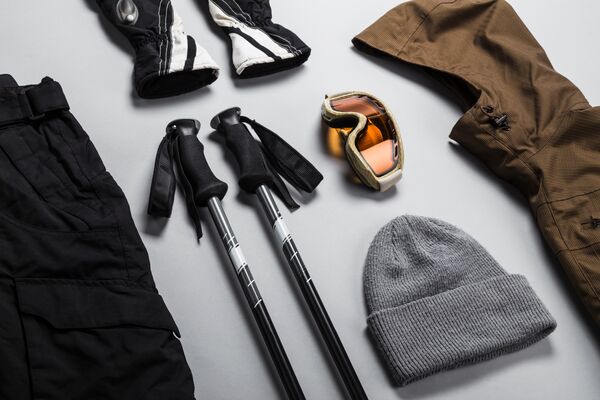
Gloves Hand protection comes in both winter gloves and mitts. Gloves offer more dexterity, yet mittens will provide greater warmth. Casual skiers and boarders will find plenty of affordable synthetic options that require little upkeep. If you want durability, choose a full leather option from a brand like Hestra. Don’t forget to maintain them with a leather balm.
Ski Socks These come in different thicknesses and padding profiles depending on your needs. Again, Merino Wool is what you want. Polyester works well for the budget skier. Avoid cotton at all costs due to its poor performance in wet conditions.
Ski and Snowboard Suit A great-fitting suit allows you movement and warmth on the slopes. Find a suit that is at minimum water water-resistant and breathable. The more you spend, the more features you get. Gore-Tex is an industry standard, but you’ll pay a pretty penny for it. You can also source excellent second-hand options in ski towns or your local buy-and-sell.
Hard Goods
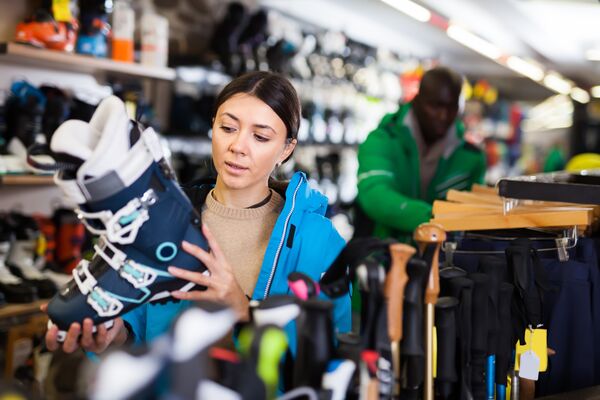
Ski and Snowboard Boots Owning a pair of ski or snowboard boots is very important for comfort and performance. Having a dedicated set of boots that are molded to your feet will ensure you experience minimal discomfort and predictive performance, no matter what skis or snowboard you’re on.
Helmet A great helmet keeps you safe, and for hygienic reasons, you’ll want your own. Rentals can be ill-fitted and aged.
Goggles You’ll want your own pair that integrates properly with your helmet and any eyewear you own. If you frequent ski resorts with cloudy weather, find a pair of goggles with magnetic lenses, as this makes switching them out a breeze. Some of the newest tech has GPS tracking, HUD, and more.
Ski Gear Essentials to Rent
Renting certain pieces of gear can be a good strategy versus ownership, especially if you have to travel by airplane. These are items you can easily rent and offer some advantages over ownership.
Skis and Snowboards Avid skiers and boarders usually have multiple pairs of skis and boards, which makes travel a real hassle. Renting offers you a wide selection of newer equipment that can be tailored to changing snow conditions. Also, rentals are usually waxed and tuned weekly. This is a huge advantage over ownership because you never need to worry about regular maintenance.
Bluebird groomer day? Rent a pair of high-speed carvers. Massive snowstorm in the forecast? Request a pair of high-performance powder skis. Even as your skill level progresses, you can easily switch out your equipment for higher-end models. That’s why for beginners, it’s best to rent full gear, including boots.
Rental companies usually offer valet services too. This allows you to pick up your skis in the morning and drop them back off at the base of the mountain. No need to transport them awkwardly to and from your accommodation.
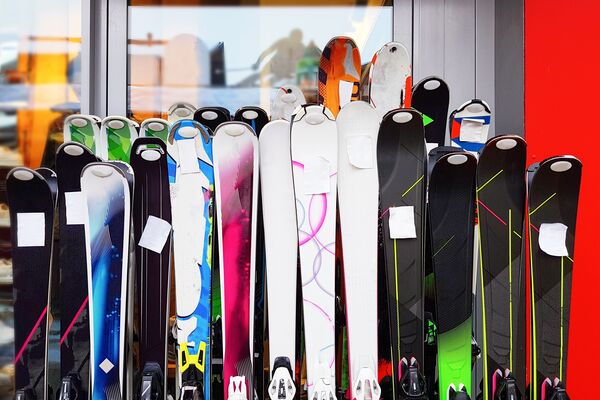
Ski Poles These can be cumbersome to travel with and are seriously cheap to rent. No need to worry about swapping baskets during different conditions, either. Let rentals sort that out.
Backcountry Skis and Boards Splitboards and backcountry ski set-ups are very expensive, and if you don’t live in an area where you can tour several times a season, it’s not worth buying. Technology in this department changes annually too, so renting offers you the best chance and getting on the newest snow tech.
Avalanche Gear Honestly, this one could go either way. Renting provides you peace of mind that items like an avalanche beacon are near new with fresh batteries. Probes, shovel,s and avalanche bags also take up a lot of space.
Ski Trip Packing List
Here’s a full packing list you can copy to cover your every need for a winter ski trip.
Soft Goods (Buy)
- Thermal base layers (top and bottom)
- Ski socks
- Midlayer zip / sweater
- Ski jacket and pants
- Toque / Beanie
- Balaclava
- Belt
- Gloves / Mitts
- Mineral sunscreen
Hard Goods (Buy or Rent)
- Fitted Ski / Snowboard boots
- Helmet
- Goggles
- Favourite skis or snowboard
Optional Comforts
- Hand / boot warmers
- Heated socks
- Collapsible water bottle
- High-energy snacks like trail mix, nuts, cheese, cured meats, and power bars
- Equipment lock
- Hip Flask
- Foam roller or massage gun
Renting vs. Buying
As stated above, there’s a trade-off in whether you decide to rent or buy winter gear. The biggest variable to consider is your skill level and how often you hit the slopes. If the below information still has you stumped, head on over to our rental page, which has invaluable information as well as free trip planning advice.
Beginner, novice, and casual riders can really take advantage of rental ski gear for a couple of reasons. First, as your skill progresses, so will your equipment needs. This limits the need to continually spend money upgrading your gear. Even at this stage, you can get away with renting boots and a helmet. Second, casual skiers and boarders can take advantage of renting the newest gear with the latest technology like high-performance biomaterials, light-weight designs, and more efficient camber profiles.
As your skill level progresses to intermediate and above, it’s time to consider your own setup. Imagine where you see yourself spending the most time on the slopes, and that will determine your needs. Big mountain resort or smaller local hills? On-piste, freestyle, off-piste freeride, or a mix of everything. Even if you travel around to multiple resorts, you can invest in a solid All-mountain setup and rely on rentals for big pow days.
No matter what you choose, the most important part of the setup will be your ski or snowboard boots. Boot technology these days is impressive with heat moldable liners, shells, and footbeds. Finding a high-quality boot will not only keep your feet happy, it’ll improve your performance on snow.
Conclusion
With the ski season fast approaching, it’s best to make your gear decisions sooner rather than later. Of course, owning your ski gear outright means familiarity, comfort, and confidence whereas relying on rentals takes away some of the hassle of travel and reduces upfront costs.
On ski trips, it can sometimes be beneficial to combine rental packages with overnight accommodation to increase available discounts. You can also enjoy ski concierges to ensure you’re set up with the right gear and have it stored the moment you step off the snow.
Originally from Northern Ontario, Anthony now calls Whistler, Canada, home. As an outdoor enthusiast with a passion for science and tourism writing, he chases excitement and communicates his experiences through his written work.
Anthony holds CASI 2 and CSIA 1 certifications. He has over eight years of teaching and coaching experience as a snowsports instructor and 20+ seasons of skiing and snowboarding under his belt. He also proudly holds a B.Sc in Nanoscience and Engineering from the University of Guelph and gets impressively excited about anything science related.
When away from the office, Anthony celebrates his freedom by being immersed in mountain culture, playing instruments and travelling internationally. Skiing, snowboarding, hiking and mountain biking take up his free time, often complimented by sailing and the occasional backpacking adventure.